

What the new relief means for broker-dealers and their FinOps
Elizabeth M. Attanasio, CPA, Partner, Accounting and Compliance International
On September 11, 2026, the Securities and Exchange Commission issued an order exempting Form X-17A-5 Part III from the Inline XBRL requirements adopted in December 2024. For those of us responsible for getting broker-dealer audits across the regulatory finish line, this is a welcome and practical relief.
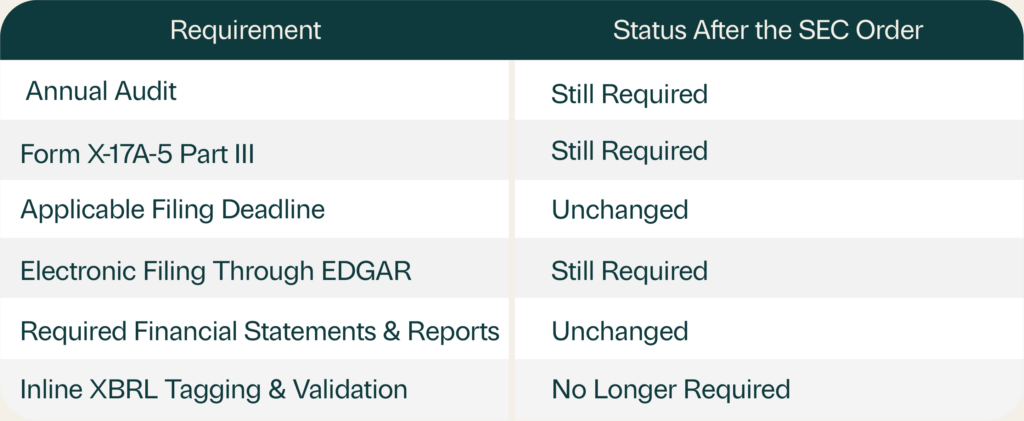
In short, the order states that while broker-dealers still have to complete and file their annual audits, they no longer have to turn those audits into an Inline XBRL project before submitting them.
It removes a new layer of tagging, validation, vendor coordination and expense that would have added work without changing the substance of the financial statements. While the audit is not going anywhere; the unnecessary conversion exercise is.
A broker-dealer’s Form X-17A-5 Part III annual report no longer needs to be converted into Inline XBRL. Now, firms should not need to hire an XBRL vendor to tag every financial-statement line, footnote and supporting schedule, and FinOps do not need to build extra time into the year-end calendar for XBRL mapping, validation and corrections.
This should help avoid increased filing costs, eliminate more potential last-minute bottlenecks and allow firms to focus their resources where they belong: producing accurate books, completing the audit and meeting the filing deadline.
What FinOps Should Do Next
FinOps should update their year-end checklists, staff procedures and client communications to remove the Inline XBRL conversion step. They should also review engagement letters and filing-vendor arrangements to make sure clients are not being charged for XBRL services that are no longer required for Form X-17A-5 Part III.
The rest of the process remains the same: close the books, support the auditors, review the final financial statements and schedules, obtain the signed reports, submit the annual report electronically and retain evidence that the filing was accepted on time.
What this Means for Broker-Dealers
Regulatory relief does not always mean less responsibility. In this situation, it means the same responsibilities, just with one less technical obstacle. Broker-dealers must still deliver complete and timely annual audit filings, but they can do so without paying to convert those filings into a format the SEC determined offered limited additional value.
That is common-sense relief we can all appreciate. Keep the important controls, deadlines and financial reporting, and eliminate the step that creates cost without improving the work.
Do you have questions about how the SEC’s Inline XRBL relief affects your firm’s annual audit process? Contact our team for practical guidance and support.
Source: SEC Release No. 34-106339, Order Granting Exemptive Relief, September 11, 2026
https://www.sec.gov/files/rules/exorders/2026/34-106339.pdf